Understanding Oklahoma City's Climate: Key Factors Contributing to Roof Leaks Explained
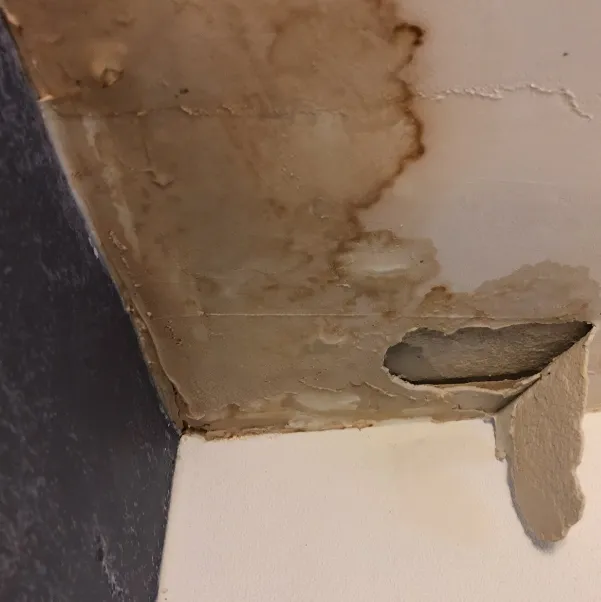
If you live in OKC, you know the saying: "If you don't like the weather, wait five minutes." That volatility—the rapid shift from extreme heat to violent storms—is precisely the reason our roofs fail sooner than those in calmer regions.
Our climate creates a relentless cycle of stress on roofing materials, often leading to hidden damage that only shows itself when a major leak occurs. By focusing on the causes today, we can better prepare for the long-term protection of your home. Let's explore the four primary climate culprits when analyzing What Factors Can Lead to Roof Leaks in Oklahoma City's Climate?
Climate Culprit 1: The Triple Threat of Hail, Wind, and Tornadic Activity
This is the most obvious and immediate cause of catastrophic roof failure in Oklahoma City. We are in the heart of severe weather country, meaning our roofs must withstand impacts and forces that roofs in coastal or mountain regions never encounter.
Hail Impact Damage (The Silent Killer)
Hail is arguably the most destructive force against an asphalt shingle roof. It’s not just about the size—a common misconception.
The Mechanism of Damage: Even marble-sized hail, when falling at high velocity, causes tiny, invisible impact bruises. These bruises fracture the fiberglass mat inside the shingle and knock off the protective ceramic granules.
How It Leads to Leaks: Once the granules are lost, the bare asphalt is exposed to UV rays (see Culprit 3). The shingle then rapidly loses its flexibility and integrity. A minor bruise today turns into a crack in a year, and that crack is a direct pathway for wind-driven rain during the next storm. Hail damage often creates thousands of tiny, decentralized entry points that compound to answer the question: What Factors Can Lead to Roof Leaks in Oklahoma City's Climate?
High Wind Uplift and Shingle Seal Failure
OKC experiences high winds year-round, not just during thunderstorms. These winds stress the roofing system continuously.
The Mechanism of Damage: Asphalt shingles rely on a thermal seal to adhere to the layer below. High-speed winds create uplift, trying to peel the shingle off the roof deck. This repeated stress breaks that seal, lifting the shingle edge.
How It Leads to Leaks: When a shingle seal fails, wind-driven rain doesn't just flow over the roof; it gets under the loose shingle and is forced laterally across the felt underlayment. If the underlayment is old or damaged, the water hits the wood deck, leading to immediate leaks and wood rot. This is why roofs often leak after a storm, even if no shingles are visibly missing.
Tornadoes and Microbursts (Catastrophic Loss)
While less frequent than hail and straight-line winds, the forces generated by tornadoes and localized microbursts can strip a roof down to the bare wood in seconds. The urgent answer to What Factors Can Lead to Roof Leaks in Oklahoma City's Climate? During severe weather is the sheer magnitude of the wind forces.
Climate Culprit 2: The Freeze-Thaw-Moisture Cycle
Oklahoma City weather doesn't just swing between hot and cold; it often cycles through freezing and thawing conditions within the span of a single day or week during winter and early spring. This cycle is incredibly destructive to materials.
The Problem of Thermal Shock
This is the rapid expansion and contraction of materials, a hidden source of failure.
The Mechanism of Damage: Imagine a day where the temperature goes from 25°F in the morning to 65°F in the afternoon, followed by a sudden drop back to freezing. The metal flashing, the wood deck, and the asphalt shingle all expand and contract at different rates. This constant, uneven movement stresses the nails, metal joints, and sealants.
How It Leads to Leaks: This stress causes caulk and sealants around penetrations (like pipe boots and chimneys) to crack and pull away from the material they are protecting. These tiny separation points are invisible until water finds them, making thermal shock a sneaky contributor to What Factors Can Lead to Roof Leaks in Oklahoma City's Climate?
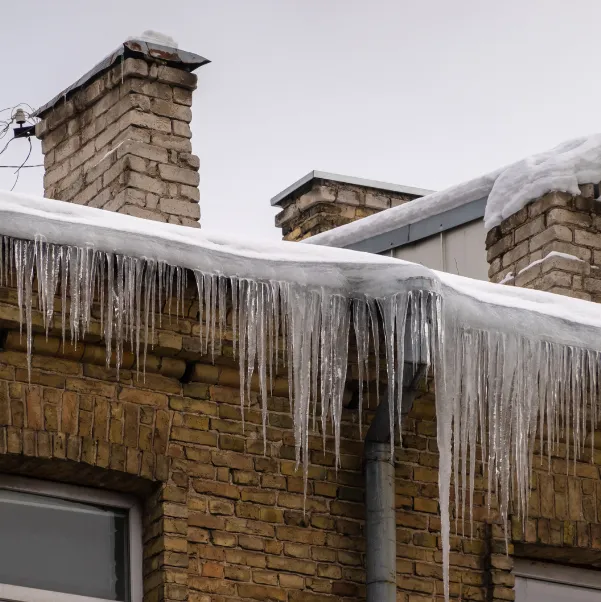
Ice Dams and Standing Water
Though less frequent than northern climates, OKC still sees enough winter weather to create ice dam problems, particularly on roofs with inadequate insulation or ventilation.
The Mechanism of Damage: Heat from the home rises and melts snow on the upper parts of the roof. This water runs down to the colder, unheated eaves and refreezes, forming a barrier of ice—an ice dam.
How It Leads to Leaks: The water then backs up behind the dam, pooling against the shingle edges. Standard asphalt shingles are not designed to withstand standing water. The pooled water seeps up under the shingle, penetrates the roof deck, and causes a leak that can saturate walls and insulation.
Climate Culprit 3: The Relentless Oklahoma City Sun (UV Degradation)
While storms deliver instant damage, the summer sun delivers slow, constant destruction. Oklahoma summers are legendary for their intensity, which is a key part of What Factors Can Lead to Roof Leaks in Oklahoma City's Climate?
Ultraviolet (UV) Ray Attack
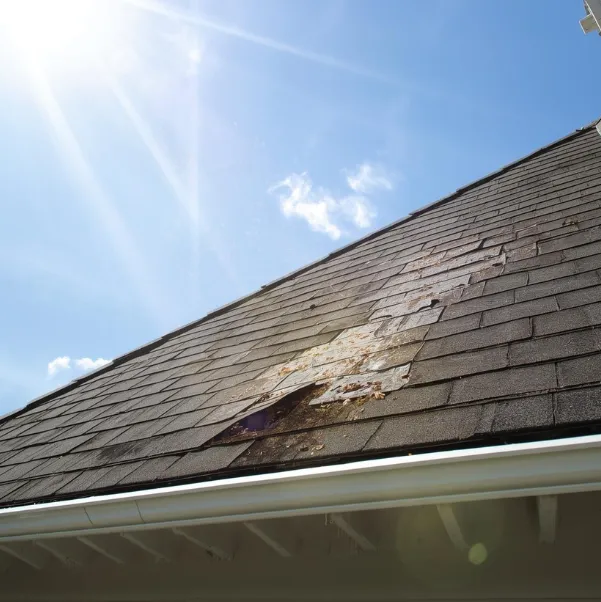
The sun’s ultraviolet radiation is the single largest factor in the long-term aging of roofing materials.
The Mechanism of Damage: UV rays break down the chemical bonds in the asphalt, causing it to oxidize and harden. This is why roofing granules are so crucial—they are the UV shield.
How It Leads to Leaks: Over time, the asphalt becomes brittle. This brittleness means the shingle can no longer flex or absorb impact. When the next hailstorm or windstorm hits, the brittle shingles immediately crack, chip, or blow off entirely, creating widespread leaks. Even without a storm, brittle shingles crack naturally as the home settles or the roof deck moves.
Internal Heat and Ventilation Failure
The sun doesn't just hit the top of the roof; it heats the air underneath it.
The Mechanism of Damage: An attic without proper ventilation (balanced intake and exhaust) can reach temperatures exceeding 150°F. This superheated air bakes the underside of the roof deck and the asphalt shingles.
How It Leads to Leaks: This "internal cooking" accelerates the breakdown of the shingle mat from the inside, causing it to curl, warp, and blister. A curled shingle cannot effectively shed water and is structurally compromised, drastically shortening the roof’s lifespan and creating a prime target for leaks. Poor ventilation is one of the most common non-storm answers to What Factors Can Lead to Roof Leaks in Oklahoma City's Climate?
Climate Culprit 4: Precipitation and Humidity Extremes
Oklahoma City often sees extended dry periods interrupted by heavy, intense downpours. This imbalance creates different, yet equally damaging, pressures on your roofing system.
Intense, Wind-Driven Rain
When it rains in OKC, it usually pours, and it often comes sideways.
The Mechanism of Damage: During a typical drizzle, the roof system is highly effective at directing water off the surface. However, a wind-driven downpour forces water up and under compromised areas like loose shingles, flashing, and vent edges.
How It Leads to Leaks: The system, designed to work vertically, is overwhelmed horizontally. Water penetrates the roof deck in areas that would normally stay dry, exposing the interior to immediate leakage. This is the final step in the leak process for systems already weakened by hail or high winds.
High Humidity and Condensation
Especially in the spring and summer months, the humidity in Oklahoma City can be oppressive.
The Mechanism of Damage: When the warm, moist air of the attic meets a cold surface (like the back of the roof deck or a cold pipe), condensation forms. If the attic is poorly ventilated, this moisture doesn't escape.
How It Leads to Leaks: Persistent condensation soaks the wood rafters and roof decking. This constant dampness promotes wood rot and allows mold and mildew to flourish, weakening the structural integrity of the roof from the inside. This structural decay eventually causes components to shift, creating gaps and leaks. This subtle, chronic moisture is a key factor when understanding What Factors Can Lead to Roof Leaks in Oklahoma City's Climate.
Climate Stressors and Solutions
The biggest difference between an OKC roof and others is the rate at which materials break down. Our triple threat of hail, extreme winds, and relentless UV exposure means your roof is perpetually under attack.
Climate Factor:
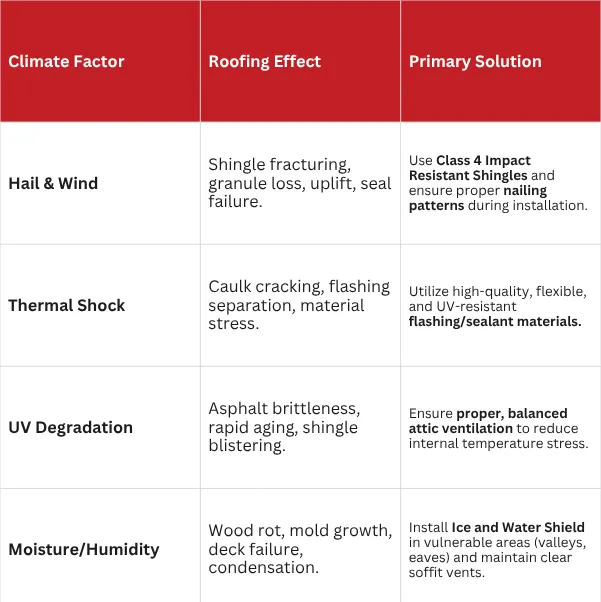
Understanding What Factors Can Lead to Roof Leaks in Oklahoma City's Climate? empowers you to ask for the right materials and the right installation techniques—techniques that are specifically tailored to withstand the reality of living in Oklahoma.
Ready to partner with a roofing company that values integrity, quality, and customer satisfaction?
Your roof needs a defense system designed for the rigors of Tornado Alley, not a temporary patch. At Total Restoration OK, we don't just fix leaks; we engineer roofing systems to withstand the unique climate challenges of Oklahoma City—from the highest wind pressures to the most intense UV radiation.
Look no further than Total Restoration OK. We are your go-to source for reliable Commercial Roofing services in Oklahoma City, and we're proud to be one of the most trusted Roofing Companies in Oklahoma. We provide solutions that last because we understand the science of our local climate.
Call us now at (405) 209-1344 or visit our website to schedule your roofing installation project and experience real value, honest assessments, transparent pricing, and long-lasting results.
Schedule Your Quality Roof Assessment Today.
Ready for real value? Simply fill out the form for a professional roof assessment and receive your honest, detailed quote for any needed work.
